


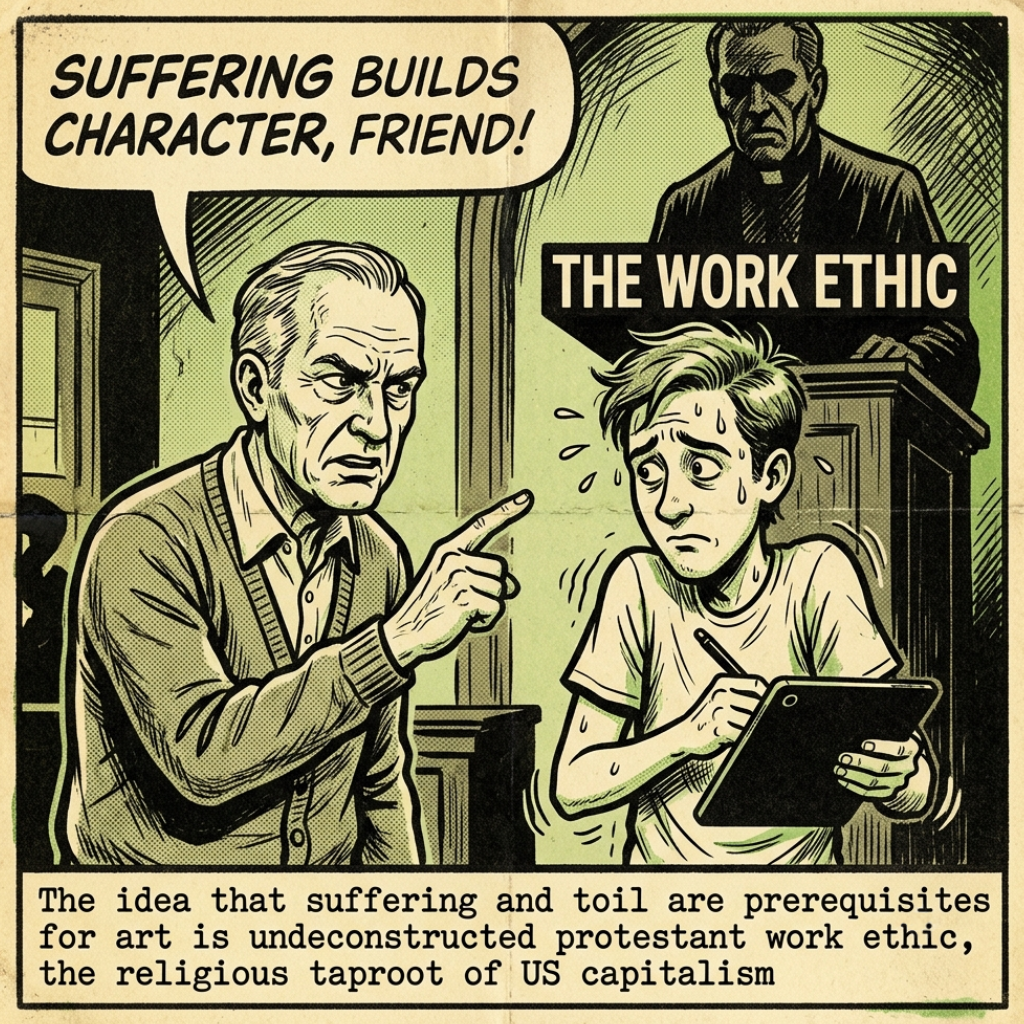
The Protestant work ethic is a specific sort of doctrinal and theological narrative that does extractive work for capitalism. It's rooted in the garden and the fall where Adam's curse is for his labors to be toil and suffering.
Grafted onto that there's an anxiety through Calvinism where salvation cannot be earned or chosen but is predestined - those predestined are called "the elect". So the anxiety becomes "am I among the elect?" and the success purported to flow from disciplined application of the work ethic is seen as evidence of grace and includedness in the coming redemption. It places the hard worker among the elect.
People who didn't sufficienly toil (lazy!!) were seen as suspect, unrighteous, damned. This condemnation of the idle shows up as poor-shaming and violence against unhoused and disabled people, and now it's showing up in AI discourse as shaming people who aren't willing to "put in the work" and making the "blood sweat and tears" of acquiring technical skill the locus of whether a particular creative expression can claim the righteousness of being "art".
Capitalism exploits all of this to gain enthusiastic participation in the machinery of wage labor, and with commodified art we see this perfectly. The precise function is to shame "idle" creatives in defense of those who toil for their wages, placing the "lazy" ones in a status of less-thanness and making the whole thing supremacy-coded.


Comments